



Dzongri Trek
About
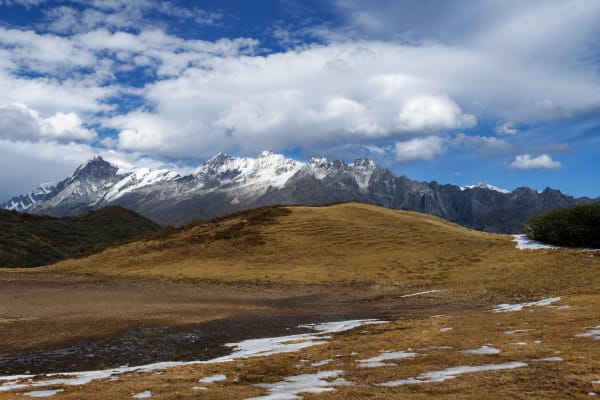
Dzongri is Sikkim's reward for trekkers short on time but big on ambition - a high-alpine viewpoint at around 4,000-4,200 m in West Sikkim, deep inside the Kanchenjunga National Park, a UNESCO World Heritage site. It's the compact cousin of the legendary Goechala trek, delivering jaw-dropping views of Kanchenjunga, the world's third-highest peak, without committing two weeks of your life.
What makes it special:
- A front-row seat to Kanchenjunga, Kabru, Pandim, and the rest of the Himalayan giants from Dzongri Top
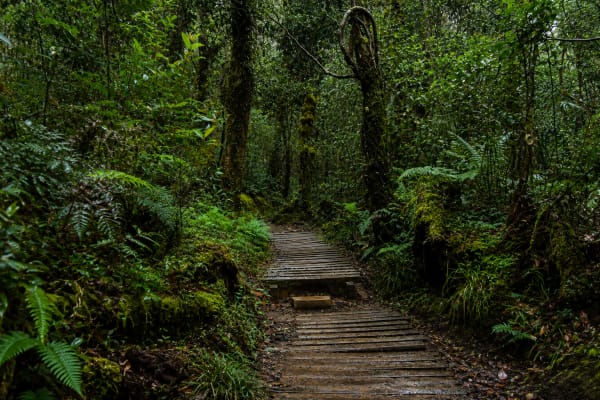
- A trail through moss-draped oak, magnolia, and rhododendron forest that erupts in colour every spring
- Real wilderness: tented camps, suspension bridges, and a steady climb through a protected wildlife sanctuary home to red pandas and blue sheep
The climb is steep, and the air gets thin fast, gaining well over 2,000 m from Yuksom in just a couple of days, so this one rewards trekkers who show up reasonably fit. Reach Dzongri Top at sunrise, and Kanchenjunga turns gold in front of you - Sikkim's most spectacular short trek, earned one switchback at a time.
Getting There
Dzongri begins and ends in Yuksom, Sikkim's old capital and the gateway to all treks in the Kanchenjunga range. The nearest railhead is New Jalpaiguri (NJP), and the nearest airport is Bagdogra, both around 145–160 km away in neighbouring West Bengal, roughly a 6-8 hour drive to Yuksom. There are no direct buses or shared jeeps from either, so booking a private vehicle is the way to go.
The best times to trek are March to May and September to November, when skies stay clear and Kanchenjunga is in full view. Permits for Kanchenjunga National Park are mandatory and are usually arranged by your trek operator, so carry valid ID and a couple of passport photos. Budget extra time for acclimatization on the way up, and keep a buffer day on either end for the long drive in and out of the hills.