Before you ever get in the raft, the guide is already reading the water. Learning even the basics of how they do it makes you a better, calmer paddler — and a safer one.
The river tells you everything if you know what to look for. Smooth tongues of water pointing downstream are your line. White, churning water means rocks or a drop underneath. The trick is learning to see the difference from upstream, while you still have time to react.
Reading the tongue
The “tongue” is the smooth, V-shaped section of fast water that funnels between obstacles. It points the way through. Aim the raft down the tongue and you ride the cleanest path through a rapid.
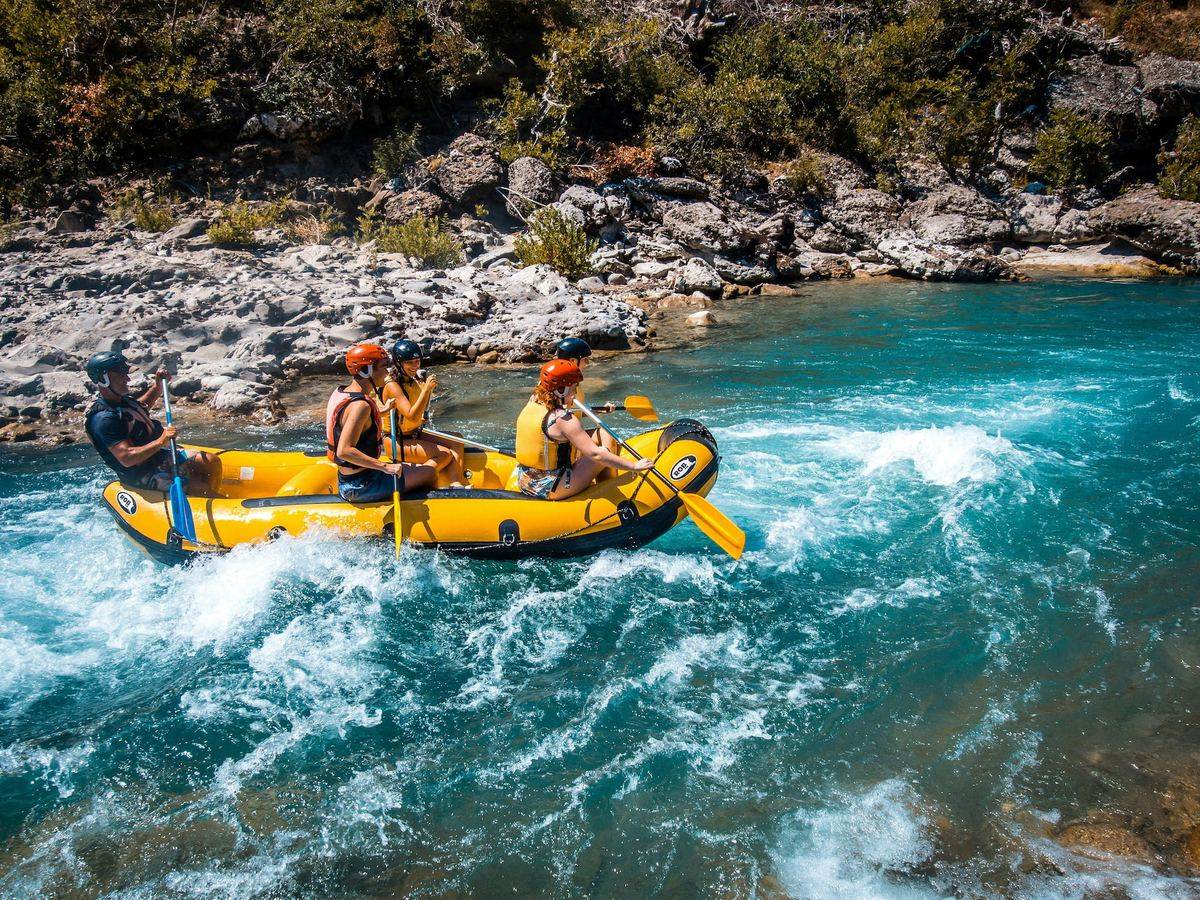
Notice in moments like the one above how the raft sits in the darker, smoother channel rather than the white chaos on either side. That dark water is deep and fast — exactly where you want to be.
When to walk it
Not every rapid is worth running. If you can’t see a clean line, if the water level is unusually high, or if your group’s experience doesn’t match the grade, the right move is to portage — carry the raft around on foot.
The golden rule A rapid you walk around is a story you get to tell later. A rapid you run badly is one someone else tells about you. There is no ego in scouting.
Good guides scout anything they can’t read from the boat. Follow their call every time.